Minolta MD 28-85mm 1:3.5-4.5 Zoom Macro – review

Minolta MD 28-85mm 1:3.5-4.5 Zoom Macro lens review
- Official classification: New-MD
- Collector’s classification: MD
This MD 28-85/3.5-4.5 usually is hidden behind the shadow of much more famous MD 35-70/3.5 but about me personally – I prefer to take this 28-85/3.5-4.5 instead of 35-70/3.5 in any case. Real convenience in using is better than a tiny better resolution in some positions.
This has been tested by Great and Powerful Antony Hands in his The 35mm Shoot-out – as a zoom which can compete with wide-angle primes.
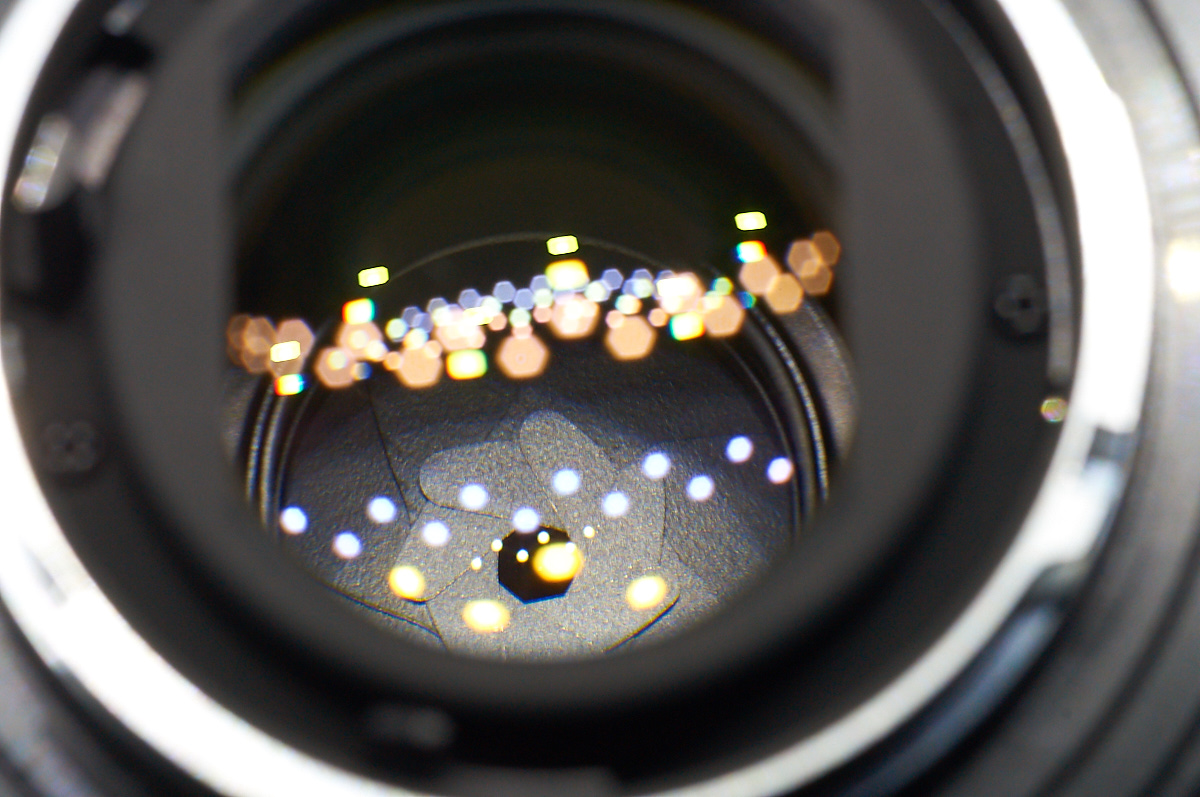
Tests for this review are divided for: 28mm, 35mm, 50mm, 85mm groups.
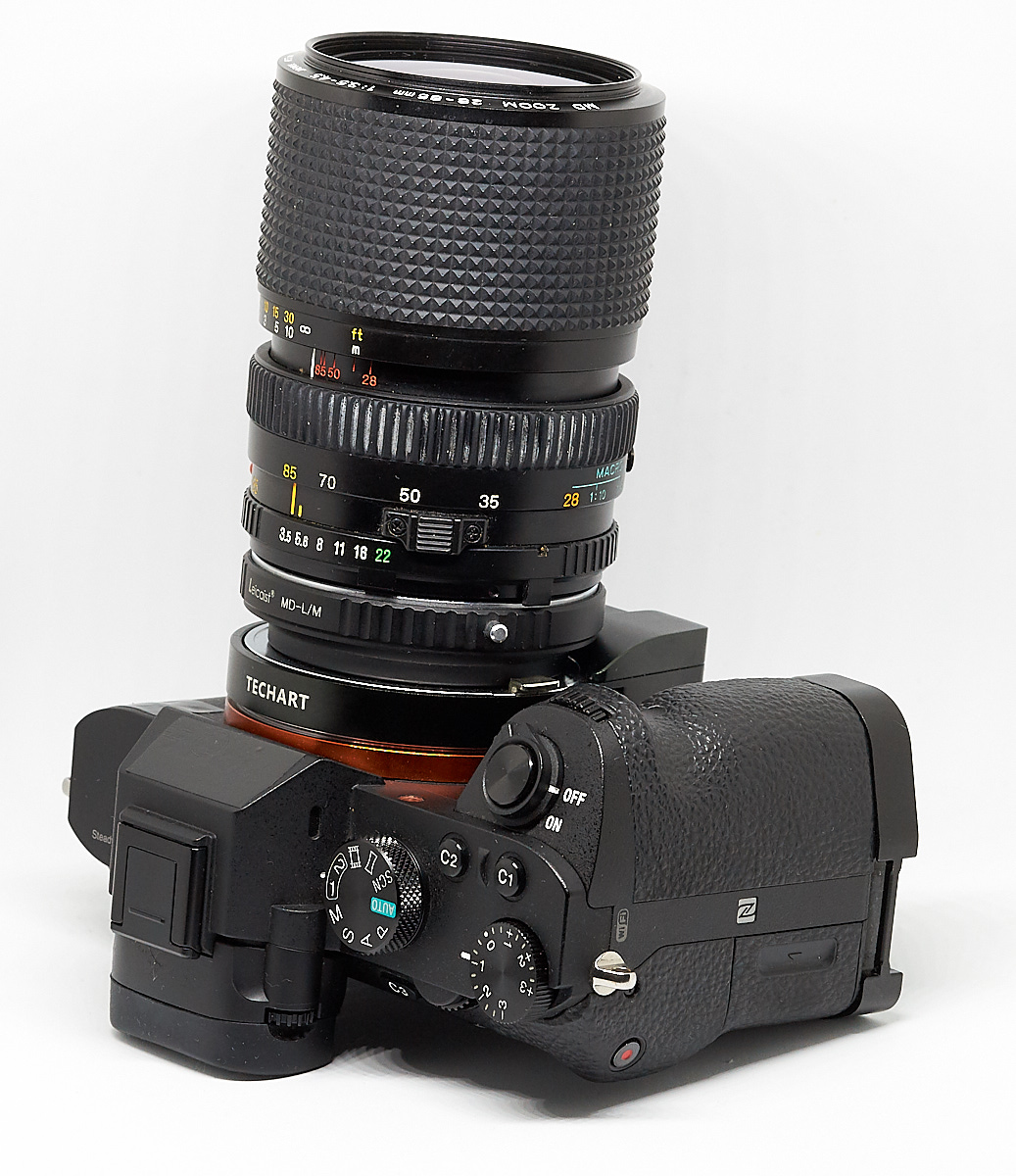
Minolta MD 28-85mm F3.5-4.5 Zoom Macro specifications:
| # in minolta.eazypix.de index | 256 |
| Name engraved on the lens | MD ZOOM |
| f[mm] | 28-85 |
| A max [1/f] | 3.5-4.5 |
| A min[1/f] | 22 |
| Lens design [el.] | 13 |
| Lens design [gr.] | 10 |
| Filter thread Ø front(rear)[mm] | 55 |
| Lens Shade | clip-in |
| closefocus[m/ft] | 0.8/2.75 |
| Dimension Ø x length [mm] | 65.5×86.5 |
| Weight[g] | 470 |
| Year | 1983 |
| Style | MD III |
| Code No. (ROKKOR-X) or Order No. | 2503-110 |
| Notes | 2-Touch w/ macro mode |


More data
| Floating elements | YES |
| Aperture blades number | 6 |
| Confidence in the test results of reviewed copies | Enough |
| Reviewed lens SN: | 1057812 |
There’s no doubt that the lens’s optical design contains floating elements – it’s still a zoom. But some sources report that the design includes aspherical elements. Could this be true? There are quite a few reports online that aspherical elements are present, but I couldn’t find a source. However, some experts confidently report this, and I’m inclined to believe them. Because firstly – I’m Minolta fan, secondly – this lens’s release period coincided with the widespread use of aspherical elements in optics.
Here is a quote from Mitchell Alexander’s:
Apparently the MD-III 28-85 F3.5-4.5 does contain one or more aspherical elements.
True asphericals are difficult to manufacture and at the time were hand-ground by professional tradesmen, while most lenses could be automatically ground according to CAD or programmed machines in regular production.
The earliest aspherical lenses advertised in the late 50’s and early 60’s didn’t always contain true asphericals, but simply had 2 different spherical curvatures on the same lens, which didn’t produce great results.
Where Minolta was positioned in the market with regards to price and quality, perhaps it just made no sense to produce such a high quality lens that would only really compete with the likes of Canon’s 55/1.2 SSC (1971-1980), Nikon’s Noct-Nikkor 58/1.2 (1977-) and Leica’s Noctilux 50/1.2 (1966).
They made many more innovations anyway.
Opposit opinion by Michel Brien:
To my knowledge, the first Minolta lens with aspherical element was the AF 35-70 F4 from the early AF series but it was a thin organic glass lens element as part of the front group of elements, which was far easier to manufacture. Some later AF lenses also eventually gained Aspherical elements ( 17-35 F 3.5, 28-70 F2.8, 35mm F 1.4, 24-85 F 3.5-4.5 to name some)
Minolta MD 28-85mm 1:3.5-4.5 Zoom Macro lens exterior:
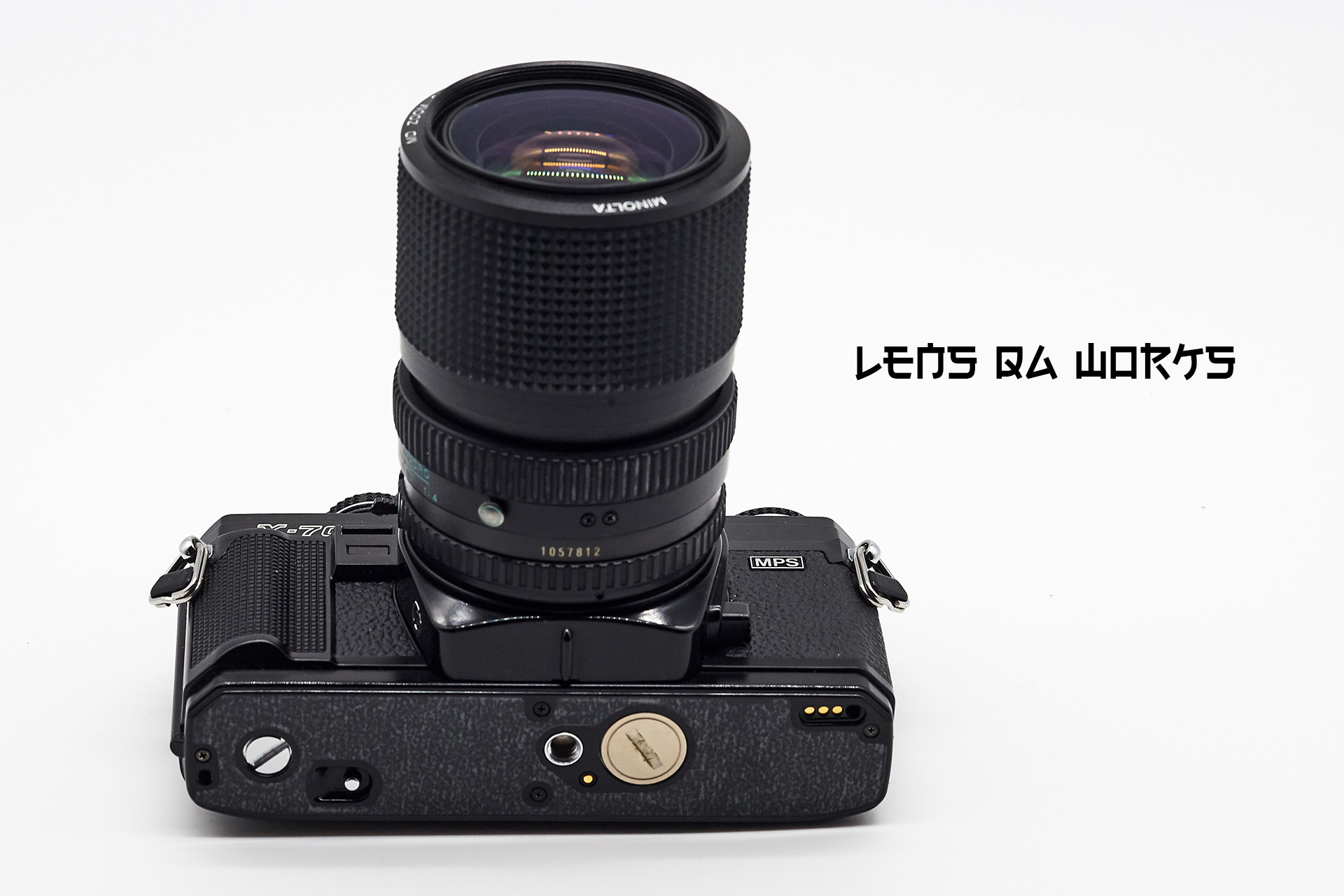
The reviewed copy is in excellent condition except for slight white bloom on the rubberized ring of sharpness.


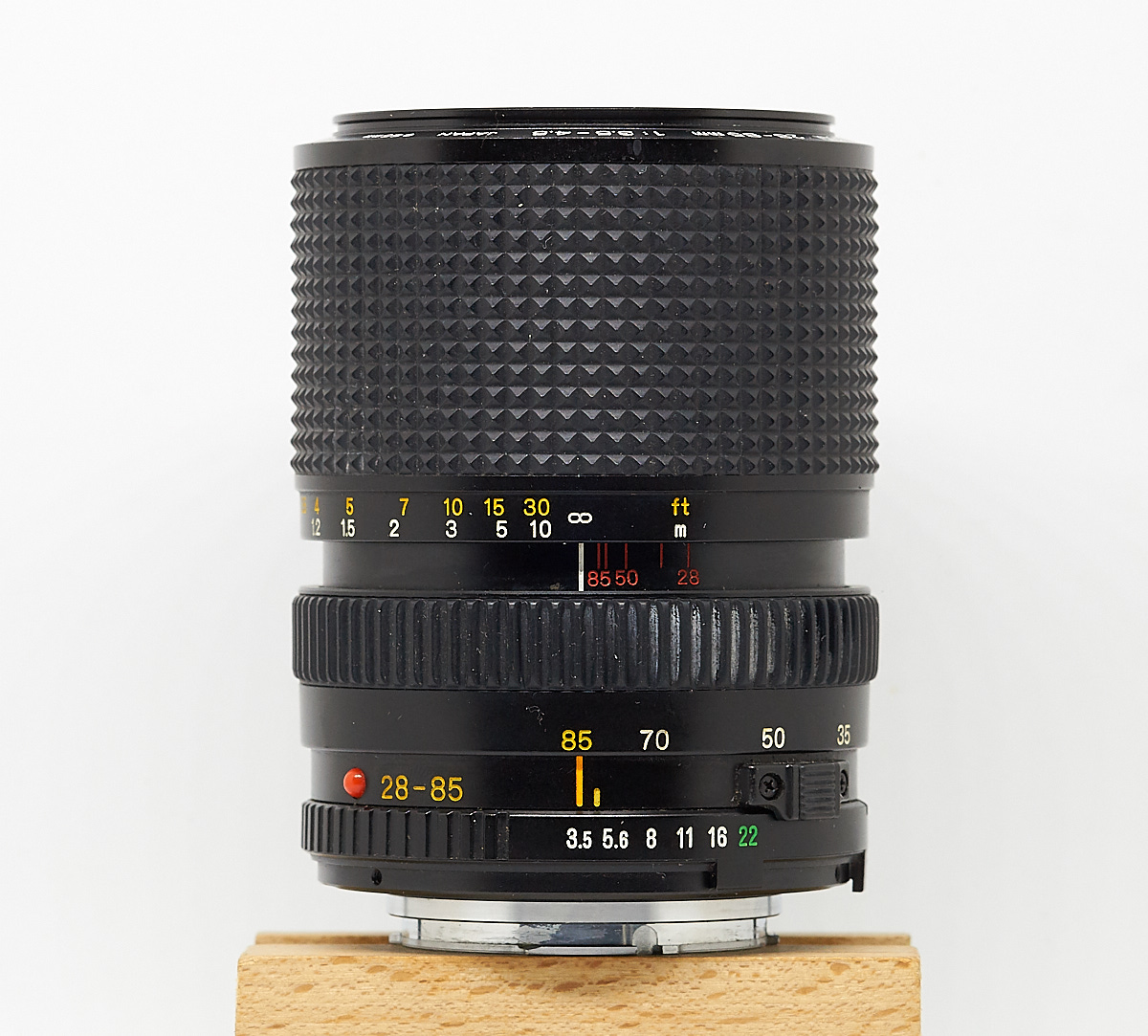
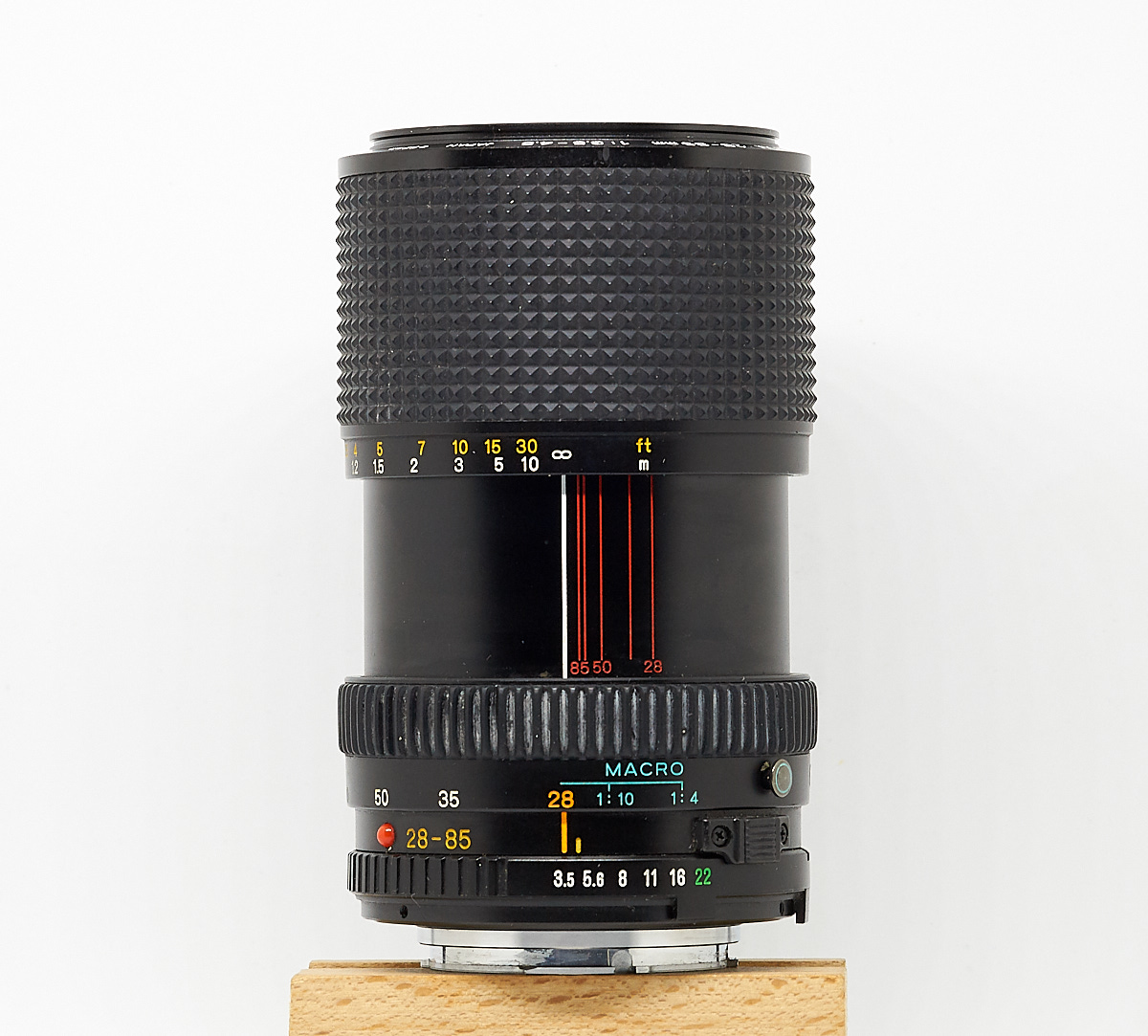


Mounted on Minolta X-700
This is a very suitable set – the camera and lens have the same design (1981 – camera, 1983 – lens)


Lens shade:


Minolta MD 28-85mm 1:3.5-4.5 Zoom Macro sharpness
Сlose-distance resolution test, minimal distance
Testing methods description
- Target: 10-15 cm picture, printed on glossy photo paper
- Distance: 1.7m
- Camera: Sony A7II (24mpx, full-frame, tripod, remote control). M-mode, ISO fixed, WB fixed, SteadyShot – OFF.
- The test was repeated for every F-stop on every focus position with manual focus adjustment for each shot. That is to avoid the effect of field curvature.
- RAW processing: Capture One, default settings. All quality settings – 100%. Crops – 300×200 px
Original target image (printed in horizontal orientation on 10cm X 15cm glossy photo paper

Long-distance resolution test
Testing methods description
- Target: cityscape
- Distance: > 200 meters to center focus point
- Camera: Sony A7II (24mpx, full-frame, tripod, remote control). M-mode, ISO fixed, WB fixed, SteadyShot – OFF. The focus point is on the center only.
- RAW processing: Capture One, default settings. All quality settings – 100%. Crops – 300×200 px
Minolta MD 28-85mm 1:3.5-4.5 Zoom Macro TEST RESULTS on FOCUS DISTANCE = 28mm
28mm – Sharpness – short distance
Scene preview

Test results

28mm – Sharpness – long distance
Scene preview

Test results

28mm – Vignetting

28mm – Geometric distortion

28mm – Coma aberrations
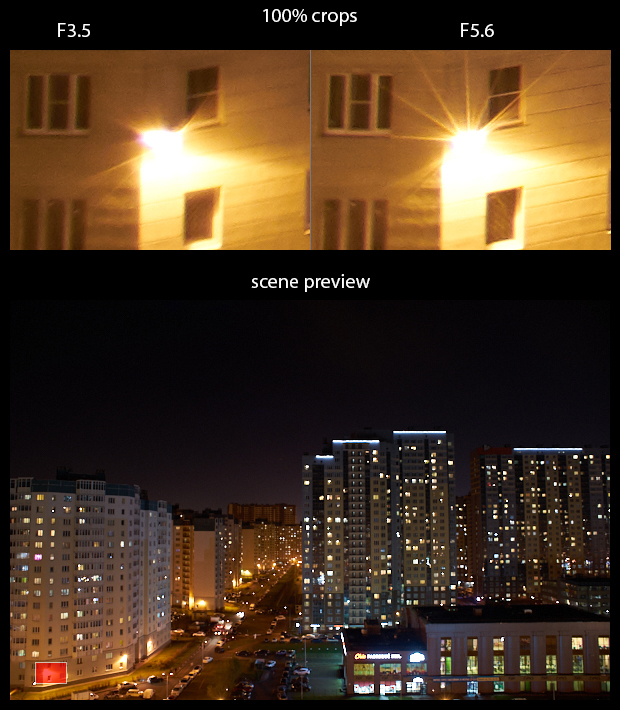
28mm – Chromatic aberrations

28mm – Long-distance bokeh
Test conditions: the lens was focused on 0.8m, buildings are on “infinity”-distance

28mm – Light bubbles bokeh:
The lens is on the minimal focusing distance 0.8m, lights are on infinity (cityscape)

Minolta MD 28-85mm 1:3.5-4.5 Zoom Macro TEST RESULTS on FOCUS DISTANCE = 35mm
35mm – Sharpness – short distance
Scene preview

Test results

35mm – Sharpness – long distance
Scene preview

Test results

35mm – Vignetting

35mm – Geometric distortion

35mm – Coma aberrations
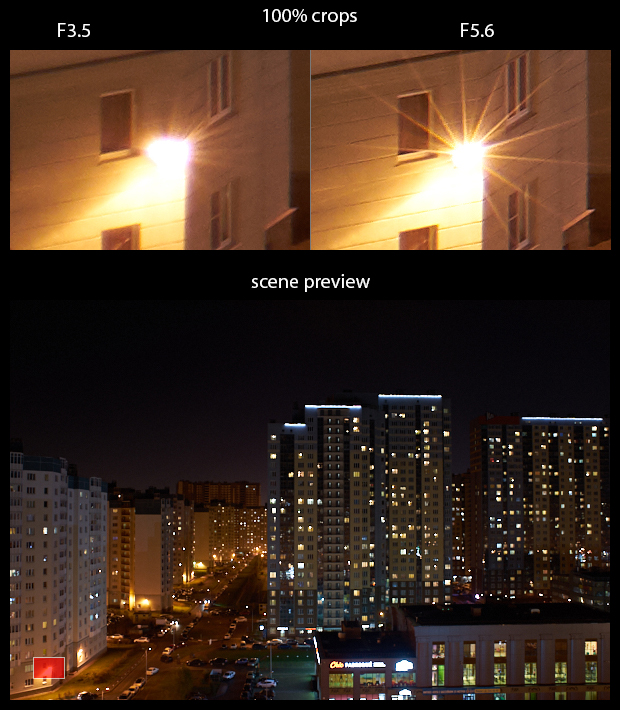
35mm – Chromatic aberrations
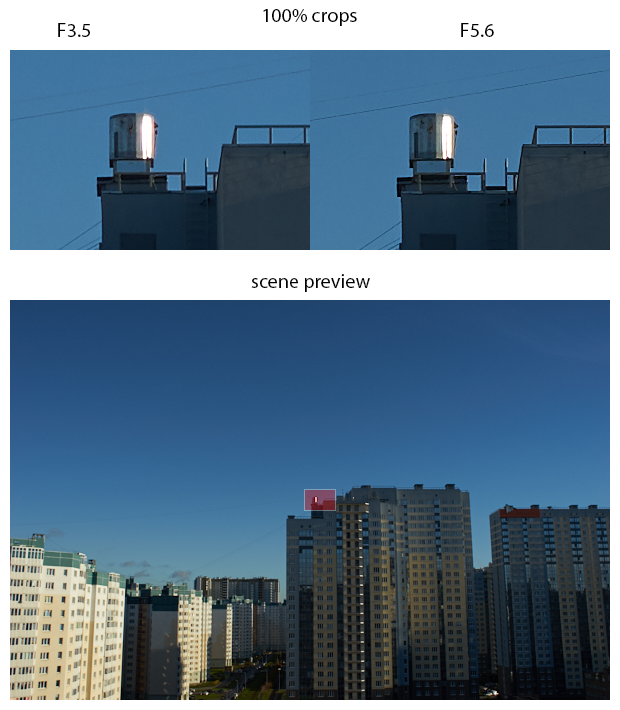
35mm – Long-distance bokeh
Test conditions: the lens was focused on 0.8m, buildings are on “infinity”-distance

35mm – Light bubbles bokeh:
The lens is on the minimal focusing distance 0.8m, lights are on infinity (cityscape)

Minolta MD 28-85mm 1:3.5-4.5 Zoom Macro TEST RESULTS on FOCUS DISTANCE = 50mm
50mm – Sharpness – short distance
Scene preview

Test results

50mm – Sharpness – long distance
Scene preview

Test results
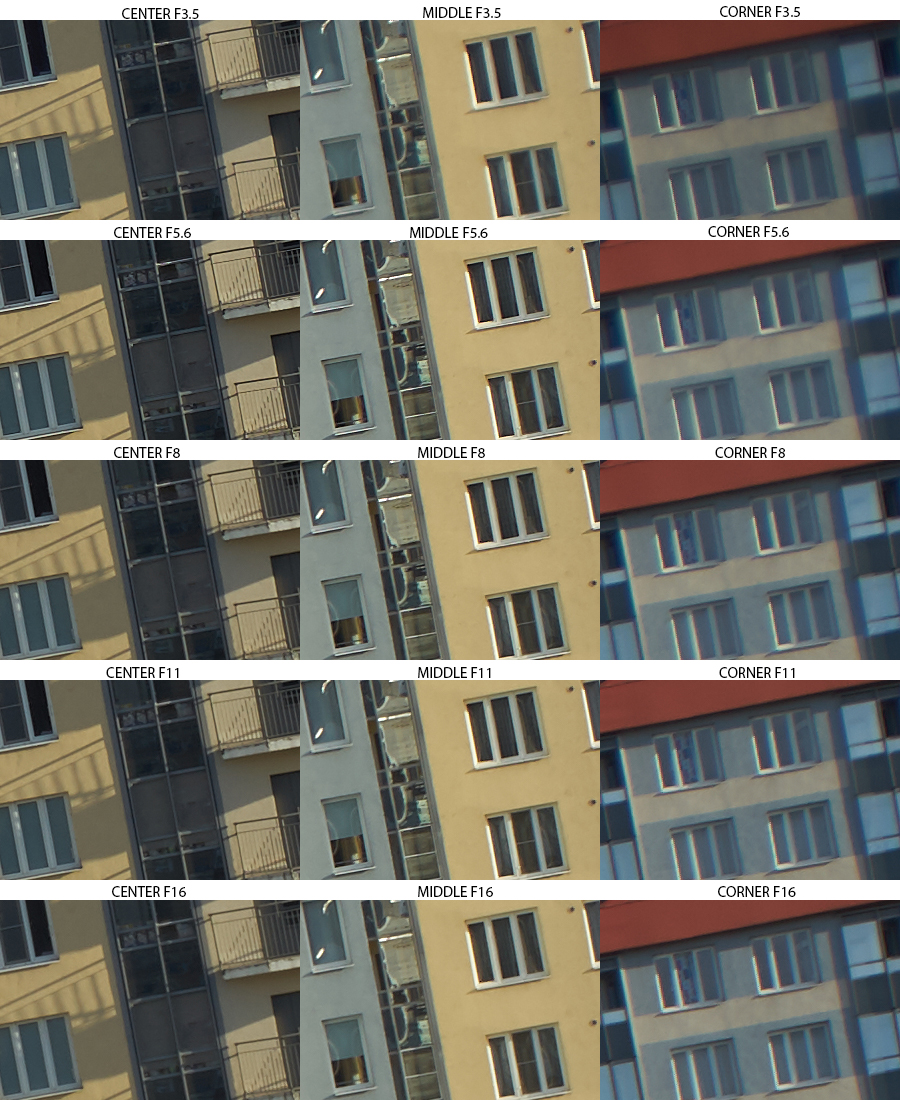
50mm – Vignetting

50mm – Geometric distortion

50mm – Coma aberrations

50mm – Chromatic aberrations

50mm – Long-distance bokeh
Test conditions: the lens was focused on 0.8m, buildings are on “infinity”-distance

50mm – Light bubbles bokeh:
The lens is on the minimal focusing distance 0.8m, lights are on infinity (cityscape)

Minolta MD 28-85mm 1:3.5-4.5 Zoom Macro TEST RESULTS on FOCUS DISTANCE = 85mm
85mm – Sharpness – short distance
Scene preview

Test results

85mm – Sharpness – long distance
Scene preview

Test results

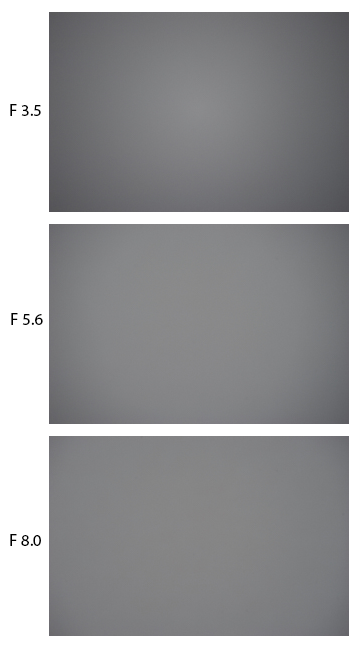
85mm – Vignetting
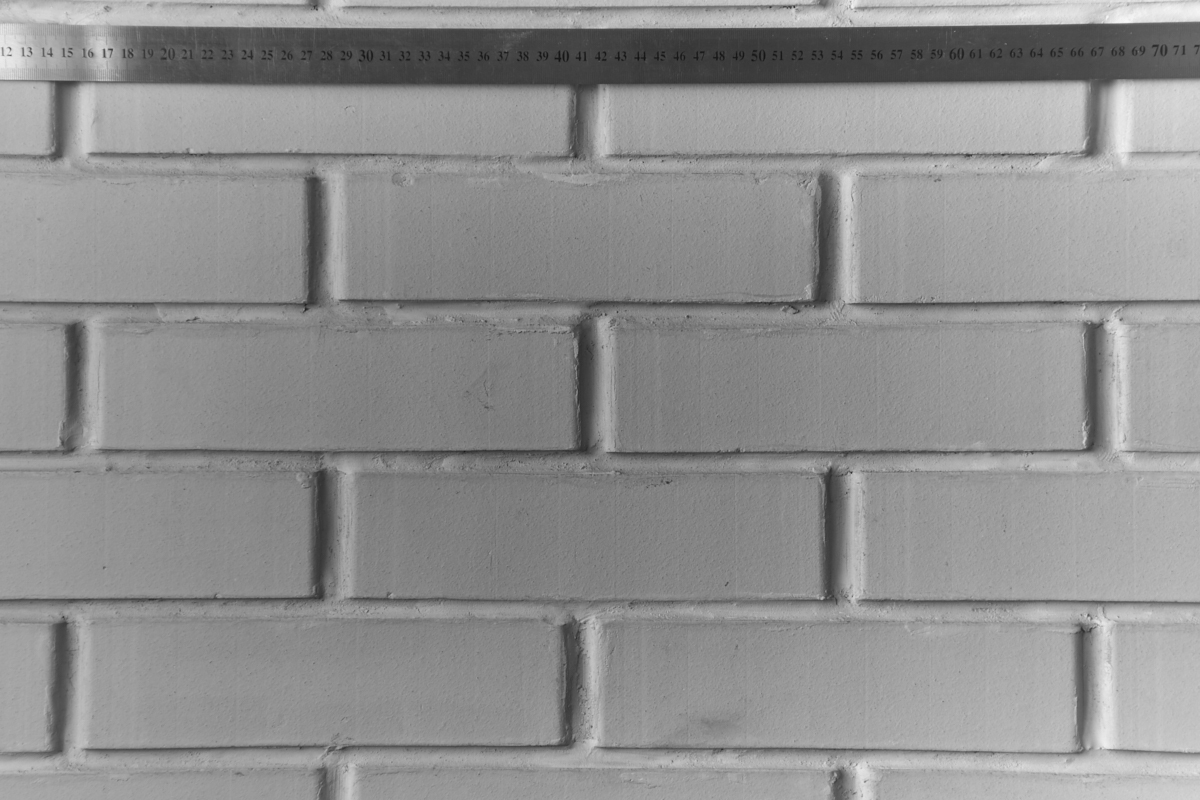
85mm – Geometric distortion
85mm – Coma aberrations

85mm – Chromatic aberrations

85mm – Long-distance bokeh
Test conditions: the lens was focused on 0.8m, buildings are on “infinity”-distance

70mm – Light bubbles bokeh:
The lens is on the minimal focusing distance 0.8m, lights are on infinity (cityscape)

Minolta MD 28-85mm 1:3.5-4.5 Zoom Macro Other resources with reviews:
Minolta MD 28-85mm 1:3.5-4.5 Zoom Macro – final conclusion

This zoom covers the wide diapason of most popular focal distances and fast enough for an inexpensive zoom lens. Additionally, it is well built, two-touch, lightweight has a macro mode, and looks beautiful. Nice fit, yes. Don’t miss it on the auctions, it still underrated.
Optical design with aspherical (probably) and floating elements – sounds cool, even for modern times. Definitely, corners aren’t ideal, but there are no reasons for pessimism, because, firstly, it is the semi-fast 3x-zoom started from 28mm – very powerful and wide, of course, it should have a weakness and this weakness looks very insignificant if to compare with more famous 2x-zooms MD 35-70/3.5 and MD 24-50/4, or maybe 1.5x MD 24-35/3.5. Secondly – center and middle(!) parts of the frame are really amazing on any focal distance, contrast is great and, finally, bokeh is unexpectedly nice from 50mm to long-end.
As a result, it can be named as another one masterpiece of the optic by Minolta – absolutely convenient universal zoom-lens which covers all photographer needs – from landscapes in travels till portraits everywhere. It may be the winner of ‘one lens in the bag’ award.




2 Comments
Christian · 2025-10-04 at 19:24
Hello,
Thank you very much for this interesting and informative review.
Do you have any sources for the information that this lens incorporates aspherical elements?
I was very familiar with Minolta in the 80ies, but I never heard of any Minolta mf lens, incorporating aspherical elements.
Thank you very much, and please keep on reviewing this wonderful lenses.
Best regards,
Christian
Tony · 2025-10-04 at 21:13
Hello Christian, thanks for your interest in this site. The theme of asperic elements in the lenses of Minolta, after your question, began to look more important than I thought before. Therefore, I added several clarifications to the text. Added to the first part of the article after the optical scheme and added the mention of the word “probably” to conclusion. You are right, such things are better to indicate more clearly